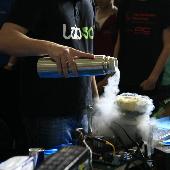
Model
Intel
Core i9 14900K (8P)
Raptor Lake-RCooling
Water (Custom)
Temperature
Load 64 °C
Idle 30 °C
Ambient 25 °C
P-Cores
5,986.80 MHz
(71%)
Memory
Product
G.Skill
Trident Z RGBCooling
Air (Stock)
Temperature
Load 50 °C
Idle 30 °C
Ambient 25 °C
Type
32 GB
DDR4 SDRAMSpeed @ 2,145 MHzTimings
tCAS: 16.0
tRCD: 16
tRP: 16
tRAS: 32
Videocard
Model
Radeon RX 9070 XT
(Navi 48)
(RDNA 4.0)
Cooling
Water (Chilled/Cold)
Temperature
Load 27 °C
Idle 10 °C
Ambient 25 °C
Speed
4,073.00 MHz
(154%)
/
2,907.00 MHz
(15%)
Motherboard
Model
PRO Z690-A DDR4Cooling
Air (Stock)
Temperature
Load 50 °C
Idle 30 °C
Ambient 25 °C
Chipset
Z690
Ooh much faster than your previous run despite the same reported frequency. I'm guessing it's because the sustained clock is more stable with the new tool ?
yep, exactly that! With clocks set using that tool effi is so much better, more stable clocks, more consistent power consumption suggesting higher effective util, it's definitely doing interesting things with using PPT to poke at the SMU. RDNA4 boost is such a PBO-like mess and with some PPT access we can finally bypass or cheese a lot of that, big ups to the creator of that tool
Comments
~4073Mhz actual, ~1.285V SVI3 (core volts after vdroop)
Ooh much faster than your previous run despite the same reported frequency. I'm guessing it's because the sustained clock is more stable with the new tool ?
yep, exactly that! With clocks set using that tool effi is so much better, more stable clocks, more consistent power consumption suggesting higher effective util, it's definitely doing interesting things with using PPT to poke at the SMU. RDNA4 boost is such a PBO-like mess and with some PPT access we can finally bypass or cheese a lot of that, big ups to the creator of that tool
Log in or register to comment